How to Choose a Stallion for Your Mare
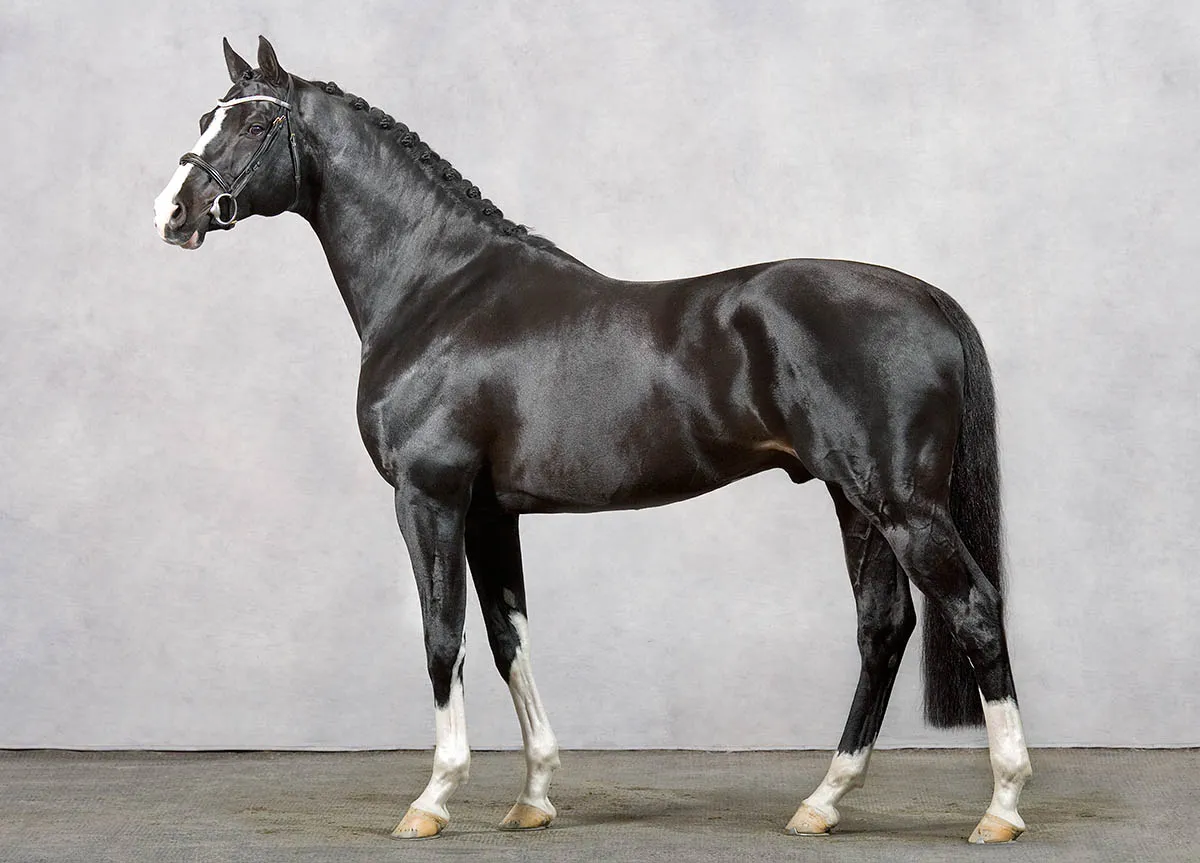
Cover image: Credit to Blup.se
Stallion videos can be a dangerous way to spend an evening. You watch one, then another, and suddenly you can picture several different foals. They all look wonderful; choosing between them is another matter.
When I decided to breed, I knew very little about stallions. I asked an experienced acquaintance, who recommended Sir Oldenburg as he thought he was 'a Camilla horse'. And I fell hard. He was amazing. I’ll come back to what helped me choose him, because there was more to it than falling for a beautiful horse.
Choosing a stallion is exciting, and you’re allowed to enjoy it! However, having a few clear priorities gives your excitement somewhere useful to go.
Let’s start with the mare and what you hope to breed, then work through the information that helps you choose. The two worksheets below give you somewhere to gather it all before taking your shortlist to someone who knows the breed.
➡️ At the end of this article, you'll find a link to my Stallion Selection Comparison Pack.
It's a free resource you can use to evaluate your options and build your stallion shortlist.
What should you compare when choosing between stallions for your mare?
Start by asking how each stallion fits your mare and the horse you hope to breed. Temperament, conformation, ability, family, and offspring all deserve a look, alongside health and the practical arrangements. Here’s a way to keep those questions together:
Compare | What you are looking for |
|---|---|
Fit with your mare and goal | Qualities that support the kind of horse you hope to breed |
Temperament | Behaviour and ridden qualities relevant to the future rider and use |
Conformation and ability | Functional strengths, movement and athletic qualities that matter to your goal |
Breeding evidence | Relevant family records, offspring information and breeding indices where available |
Health and genetic compatibility | Information about both parents and questions requiring professional advice |
Practical arrangements | Breeding method, availability, provider support, registration, costs and terms |
You don’t need an answer in every box on the first evening. Start with what you know and let the gaps show you what to ask next.
Thoughtful choices can improve the chances of the qualities you want. Even with all that preparation, your foal may turn out differently from the horse you pictured. Keep that in mind, while leaving yourself plenty of room to be excited about what’s possible.
Start with the horse you’d love to have
Decide which qualities matter most
Picture an ordinary day with your future horse. Perhaps you’re schooling, heading out for a hack, or loading up for a competition. What would make that horse a pleasure for you? Think about who will ride it, too, and whether you plan to keep it or sell it.
Your priorities can look quite different from those of someone breeding for elite sport. British Breeding’s guidance recognises those differences between amateur and elite markets. Give your own goal that same consideration.
I wanted a luxurious amateur horse who could do both dressage and jumping. Good temperament was right at the top of my list: brave, ambitious, energetic and positive. A horse to have fun with. That was the horse I hoped to breed, and it gave me something to come back to when considering a stallion.
Write down the few qualities that matter most to you. If they’re still a little vague, spend some time defining your breeding goal. You can always come back to the stallion videos afterwards.
What would you love the mare to pass on?
This is where knowing the mare is useful. You’ve probably seen her on ordinary days, in new situations and when things haven’t gone quite to plan. Which qualities would you be delighted to recognise in her foal? Are there others you’d rather not repeat?
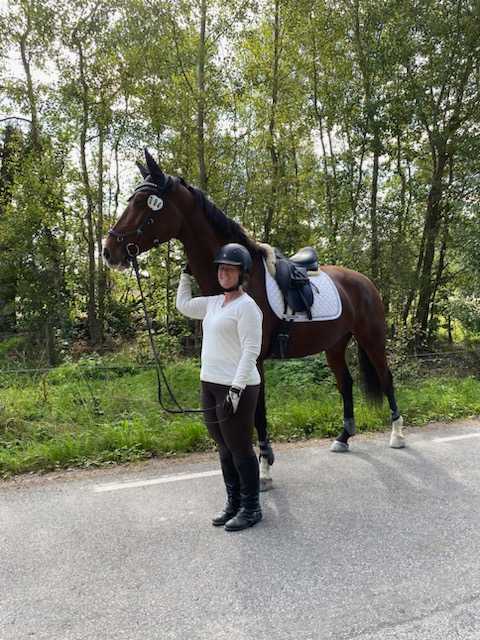
Baghira had so much I wanted to keep: her attitude, movement, lovely energy and talent for dressage, jumping and eventing. I also knew that her previous offspring had received high scores at foal shows. Those results were useful to know, even though a foal assessment only tells part of the story of the horse it will grow into.
Be as honest about concerns as you are about her strengths. You don’t have to work out alone whether an old injury or reproductive issue matters. Bring those questions to your vet. The mare’s history and examination help guide the right approach, as Merck’s reproductive guidance explains.
Here’s somewhere to put those thoughts. The aim is to get from “I’d love a horse like this” to something you can actually ask about:
Mare quality or concern | Preserve, complement, or investigate? | What I want from a stallion | Importance | What I need to find out |
|---|---|---|---|---|
__________ | __________ | __________ | __________ | __________ |
__________ | __________ | __________ | __________ | __________ |
__________ | __________ | __________ | __________ | __________ |
For example, “an enjoyable amateur riding horse” might lead you to prioritise willingness to work and manageable energy, then seek specific examples from offspring owners.
Mark priorities as essential to my goal, important, or a preference. Keep health questions separate.
If you are still deciding whether to breed, start with what to consider before breeding your mare.
Look beyond the stallion himself
Once a stallion catches your eye, there’s plenty to be curious about. What are his offspring like? Do the qualities you admire in him appear in them too? How much information is available about the things on your list?
Compare offspring and family information
That gorgeous foal in the advert is worth admiring. It’s also worth asking about the others. Look at a range of offspring where possible, including older horses, and find out about their dams. Extension Horses’ breeding guidance makes this point: one exceptional offspring gives you only part of the picture.
Different records help with different questions:
Information | Useful for understanding | Keep in mind |
|---|---|---|
Own record | What the stallion has shown himself | Performance alone does not establish what he transmits |
Family records | Relevant qualities in related horses | A pedigree does not guarantee an individual outcome |
Offspring information | Qualities observed across his offspring | Their dams, ages and environments also matter |
Breeding indices | Estimated genetic merit for defined traits | Read the trait, scale, and reliability together |
If you’re hoping for your next riding partner, ask about offspring who are already doing that job. What are they like to ride and spend time with? There won’t always be much information available, but it’s a useful question to put on the list.
Read breeding indices alongside their reliability
Breeding indices can look like a lot of numbers when you first meet them. They’re estimates of how a horse may pass on particular traits, and they become much more useful once someone explains what you’re looking at.
For example, SWB explains that its indices combine information about the horse and relatives, with adjustments for relevant environmental effects. Its descriptive indices show direction of traits, so a higher number does not automatically mean a more desirable horse.
Reliability matters too: an estimate based on limited information can change as more becomes available. SWB’s explanation of reliability makes that distinction clear.
Ask someone familiar with that studbook to go through the profiles with you. “What does this tell me about a possible match with my mare?” is a perfectly good place to start. You’re allowed to need an explanation.
What if you like a younger stallion?
A young stallion can be an exciting option, even if there’s less to learn from his offspring so far. However, you’ll need to look more closely at his own qualities and family information.
I have two close friends who bought foals bred with younger, very talented dressage stallions. Today, none of them are stallions. One got gelded because he was difficult to handle in competition environments; the other one got gelded when he was sold as a pure competition horse. Both offspring are very talented with lots of potential, but they are somewhat difficult mares, with a lot of strong opinions. I see none of that in my own horse, whose sire was older. So pay extra attention to temperament when you're interested in a younger stallion that hasn't been proven yet.
The mare matters here too. If she has a strong dam line and previous offspring with qualities you want, you have more information on her side of the pairing. That can be a useful starting point for considering a younger stallion. Treat it as a breeder’s rule of thumb to discuss, rather than a guarantee.
Ask your adviser where the gaps are and what they would want to know before recommending the match.
What does “good temperament” mean to you?
For me, good temperament included positive energy and ambition. I wanted a horse who enjoyed doing things with me. You might want something similar, or you might be happiest with a steadier, less sensitive partner. It’s worth being specific, because we can mean quite different things when we say a horse has a lovely temperament.
Sir Oldenburg was very social, sweet, kind, and curious. When I went to see him at a stallion show, I became even more convinced he was right for Baghira. I spoke with his owners there, and what they told me supported my impression. Having already fallen for him, meeting him certainly didn’t make me any less enthusiastic!
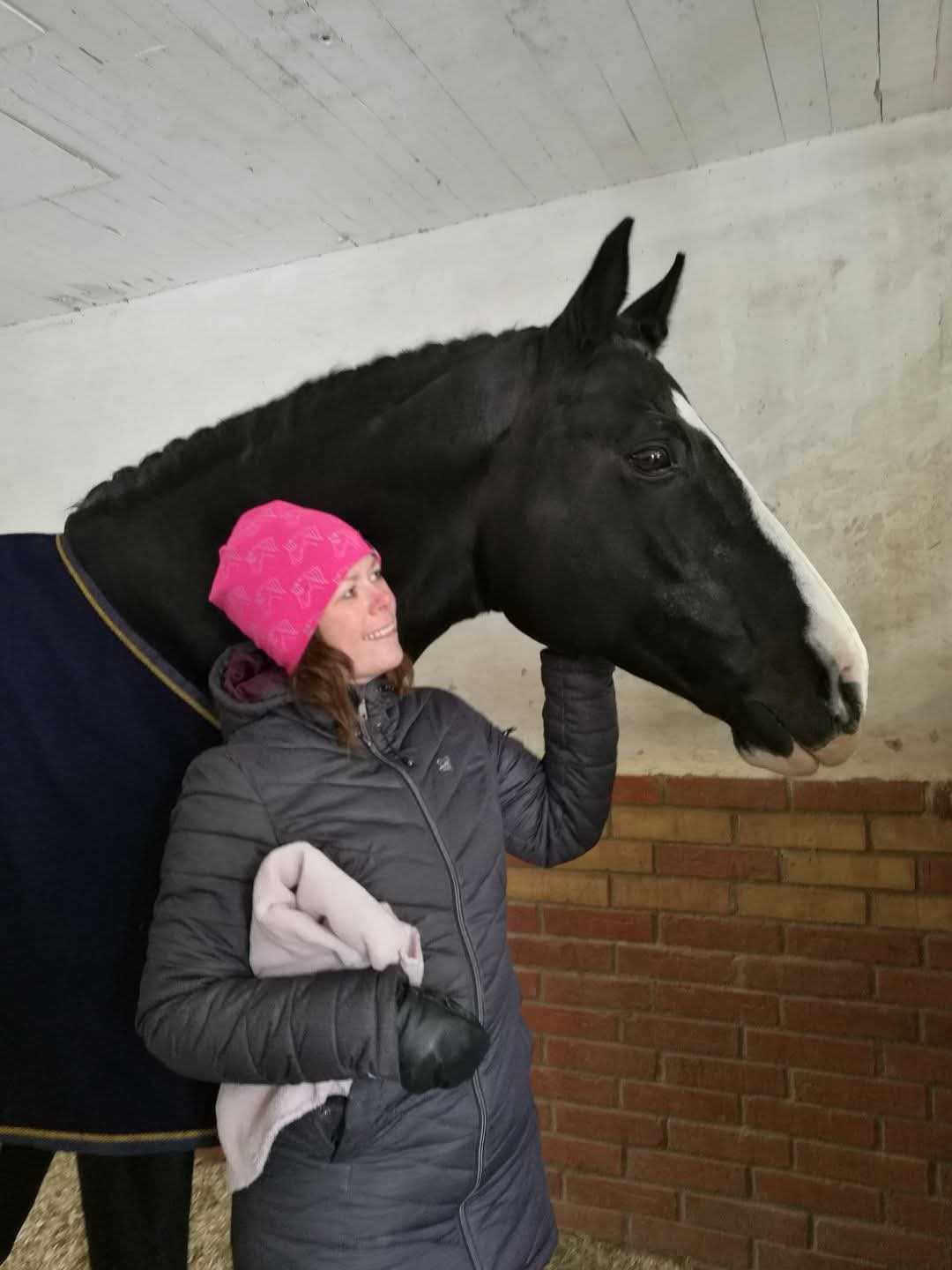
If you have the chance to meet the stallions you're considering, enjoy it and ask questions. A few useful ones are:
What is he like in everyday handling and unfamiliar situations?
How do people describe his willingness and responses under saddle?
What have different offspring owners experienced, and with what training and management?
Ask people to tell you what they’ve actually seen. “He’s lovely” is nice to hear; an example helps you understand what they mean. Where possible, speak to more than one person, including people who own offspring. Join Facebook groups and ask members for information; many stallions have one where you can discuss with those having used him already.
A calm stallion cannot guarantee a calm foal. Research into equine temperament found differing genetic and environmental influences across behavioural responses. So take temperament seriously, and remember that your foal’s experiences and upbringing will be part of the picture too.
When you write “lovely temperament” on your shortlist, add why. Those few extra words will help the person advising you understand what you’re hoping for.
Check the details before you commit
Make sense of both parents’ health information
This is a part where asking for help can save you a lot of head-scratching. Find out which genetic tests are relevant to your breed and how the two parents’ results fit together. The breed-specific panels offered by UC Davis show why the same tests won’t answer every horse owner’s questions.
Fragile foal syndrome type I, often called WFFS, provides a useful example. It is recessive: a carrier is unaffected but can pass on the variant. Two carriers have a 25% chance of producing an affected foal in each mating. A carrier paired with a verified non-carrier will not produce an affected foal from that variant, although offspring may be carriers. UC Davis explains these results.
Ask your vet or a qualified genetic adviser to explain what the results mean for your mare and the stallion. A clear result covers the condition tested; it doesn’t rule out every hereditary problem. Other conditions can also be inherited differently.
Someone familiar with the breed can also help check the pedigree for close relatedness. Put anything you’re unsure about on the shortlist, so it gets answered before you commit.
Confirm semen availability, registration and the wider cost
Before paying a fee or ordering semen, talk through the arrangements with the people who will help breed your mare. Frozen semen requires particularly close coordination with ovulation; Colorado State University’s guidance explains why management depends on semen type and circumstances. Your veterinary team can advise on suitability and support.
There are a few very practical questions to get out of the way:
Confirm | Status: confirmed, pending or needs advice |
|---|---|
Available breeding method and semen supply | __________ |
Provider’s facilities and support for this mare | __________ |
Collection days, shipping arrangements and delays | __________ |
Studbook eligibility and required paperwork | __________ |
Stud fee, veterinary work, boarding and transport costs | __________ |
Repeat attempts, additional doses and contract conditions | __________ |
Extension Horses’ guidance highlights the need to clarify collection, shipping and semen arrangements. Ask what happens if the mare does not conceive and exactly what any return service or live-foal guarantee covers.
I left Baghira at the stud farm, where they took care of everything from vet checks to scans. That was my arrangement, and yours may look different. Ask what’s included and who takes care of each part, because services and requirements vary between countries, studbooks, and providers.
Compare three stallions against the same priorities
Put what you know beside each name
Now you can bring it together. Choose up to three stallions you’d like to explore and copy your priorities from the first worksheet into this chart. If you have two, that’s fine too.
You can also download my free 'Build your stallion shortlist' resource using the link towards the end of this article.
Beside each name, note why he interests you, what you’ve found out, and what you still want to ask.
My priorities and checks | Stallion A | Stallion B | Stallion C |
|---|---|---|---|
Priority 1: __________ | __________ | __________ | __________ |
Priority 2: __________ | __________ | __________ | __________ |
Priority 3: __________ | __________ | __________ | __________ |
Relevant family and offspring information | __________ | __________ | __________ |
Breeding indices, where available | __________ | __________ | __________ |
Health, genetic and relatedness questions | __________ | __________ | __________ |
Semen, provider and registration checks | __________ | __________ | __________ |
Wider costs and contract terms | __________ | __________ | __________ |
Most important unanswered question | __________ | __________ | __________ |
For example, you might write: “Willingness to work: reported by an offspring owner; ask about the horse’s age, training and everyday behaviour.” That tells you more than a tick beside “trainable”.
Add a quick note about where the information came from: a record, an owner’s account, something you saw yourself, or something you haven’t checked yet. If you’re using an index, note its published reliability too.
Don’t worry if the chart has gaps. Finding out what you need to ask is part of its job.
Take your shortlist to someone who knows the breed
You’ve now got something useful to take to a breed association or an experienced breeder within that breed. Share the chart, tell them about your mare and explain the horse you hope to breed. Ask them to look at your choices with you.
Which match makes sense to them, and why? What have you overlooked? What extra information could change their view? Write down their thoughts and suggestions. Keep veterinary questions for your vet.
You don’t have to figure this out entirely on your own. A conversation can give you somewhere to go with all the information you’ve collected, and help you feel clearer about your choice. Use the chart to guide that conversation rather than add up a winner. An unanswered health question still needs an answer, however much you love the rest of a stallion’s qualities.
Build your stallion shortlist to keep your priorities, three candidates and adviser’s feedback together.
Click here to download your stallion shortlist for free!
Give yourself somewhere to start
My foal Disa ticked every box I’d hoped for, and then some. I was lucky to find such a lovely match for Baghira, starting with that recommendation from an acquaintance.
You can plan carefully, ask good questions, and improve the chances of getting the qualities you want. You still won’t be able to order exactly the foal you’ve pictured. Disa became taller than I preferred, and she has some small conformity issues that I need to manage with a good farrier and thoughtful training. But I wouldn't replace her with anyone else.
For now, start with the mare and a few things you’d love to see in her foal. Put them on paper, explore your options using the stallion shortlist, and ask for help. There’s plenty to learn, and plenty to look forward to.
Questions about choosing a stallion
Can a stallion correct my mare’s weaknesses?
You can aim to complement particular qualities, but inheritance does not work by reliably cancelling opposite traits. Look at relevant evidence and seek advice about the pairing. If a concern involves health or soundness, discuss it with your veterinarian rather than assuming a stallion can compensate.
Is a young stallion unsuitable for a first-time breeder?
There is no blanket answer. A young stallion may have less offspring evidence, so you will rely more on other information. Your mare’s family and previous offspring can inform the discussion, but cannot remove that uncertainty. There are never any guarantees, but for an inexperienced breeder, I'd advise using an older stallion with a proven record. A breed-specific adviser can help you weigh it.
Does good temperament mean choosing a quiet stallion?
It depends on the horse you hope to breed and the rider you have in mind. Energy, confidence, sensitivity, and willingness deserve separate thought. Ask for examples of behaviour in relevant situations, including offspring experiences where available, rather than relying on a general description such as “quiet”.
Can an FFS/WFFS carrier be considered?
Carrier status differs from being affected. For this recessive condition, both parents’ results matter: two carriers can produce an affected foal. Discuss verified results and the proposed pairing with a qualified professional. The UC Davis explanation covers the possible outcomes; do not generalise them to other conditions.
Do I need the most expensive stallion to get a suitable horse?
Price alone cannot tell you whether a stallion suits your mare or breeding goal. Compare relevant qualities and evidence, then check the whole breeding budget and contract. A higher stud fee does not guarantee your hoped-for foal, and a lower fee does not settle the suitability question either.